
Introduction
Every weekend you spend mowing, patching, reseeding, and fighting weeds is a weekend you are paying for a lawn that still doesn’t look the way you want it to. The Pacific Northwest doesn’t help; wet winters make the ground soggy, dry summers burn the grass, and the cycle of damage and repair never really ends. It just gets more expensive.
At Brookside Landscape & Design, we have watched homeowners across Kitsap County pour time and money into lawns that were never going to win, and we have helped them replace that frustration with something that genuinely works through professional artificial turf installation built for this region.
This blog breaks down the complete artificial turf installation timeline, walks you through the artificial grass installation process step by step, and tells you exactly what to expect turf installation day to look and feel like, so you can make a confident, informed decision.
How Long Does Installation Really Take?
The timeline for artificial turf installation services depends on several site-specific factors, such as yard size, soil condition, drainage complexity, and layout. Here is a realistic breakdown:
| Project Size | Estimated Duration |
| Small area (under 500 sq ft) | 1–2 days |
| Medium lawn (500–1,500 sq ft) | 2–3 days |
| Large or complex layouts | 3–5 days |
In areas like Silverdale, Poulsbo, and Hansville, where the soil is dense and the rain falls heavily in the winter, base preparation can take more time and effort than usual. But that time is well spent. Most problems with turf start when the foundation is rushed.
The difference between a lawn that lasts 20 years and one that fails in five comes down entirely to what happens before the turf ever touches the ground.
Why Artificial Turf Installation Is More Technical Than It Looks
Rolling out synthetic grass and calling it done is not installation; it is a risk. Professional turf installation involves a precise sequence of earthwork, drainage engineering, and surface finishing that directly determines how the turf performs under foot traffic, seasonal weather, and daily use.
Most DIY projects fail not because of the turf itself, but because of what was skipped underneath it, like not compacting it enough, not grading it properly, using the wrong seaming technique, or an artificial grass drainage system that can’t handle real water volume. The result? Bubbling surfaces, visible seams, standing water, and turf that needs replacing within a few years.
When installed correctly, synthetic turf is one of the most durable and easy-to-care-for surfaces you can put on a home.
The Process of Artificial Turf Installation
Every professional artificial turf installation we complete at Brookside Landscape & Design follows a disciplined, stage-by-stage process. Every step is important because it protects the one that comes after it. From consultation through final grooming, here is exactly how pros install synthetic grass.
1. Consultation, Design, and Site Assessment
Before we send any equipment, we visit your property to assess it. We check the slope and grading, the current drainage patterns, the type of soil, and how you want to use the space, whether it is a pet run in Port Orchard, a family lawn in Bainbridge Island, or a putting green in Gig Harbor. This step prevents costly surprises mid-project and allows us to engineer the drainage and base system to your site’s specific conditions.
2. Clearing and Excavation
They take off the grass, topsoil, and organic matter that is already there to a depth of 3 to 4 inches. Over time, organic matter that is left under the grass breaks down, making soft spots and uneven surfaces. Before the next phase starts, all unstable material is removed from every cubic inch.
3. Base Preparation and Drainage
This is the most important step in the whole artificial grass installation process, and the one most often underestimated. A high-quality crushed aggregate base, like Class II road base or decomposed granite, is spread out in layers and compacted to 90–95% compaction. The surface has a precise slope that directs water away from the artificial grass drainage system.
Our permeable base system is specifically engineered to handle the heavy rainfall common across Bremerton, Kingston, WA, and Port Ludlow, WA, preventing puddles, odors, and long-term turf degradation. If the base isn’t compacted correctly, it will shift and settle, making the surface uneven. Base prep for artificial turf is not a shortcut zone.
Over 70% of reported artificial turf problems, such as lifting edges, pooling water, and uneven surfaces, trace back directly to inadequate base preparation. The turf is rarely the problem; the foundation is.
4. Weed Barrier, Edging, and Turf Layout
There is a commercial-grade permeable weed barrier on top of the compacted base. It stops weeds from growing from below while letting water drain completely through the system. Then, bender board edging is put around the edges. This is what keeps the turf from moving or pulling away from the edges over time.
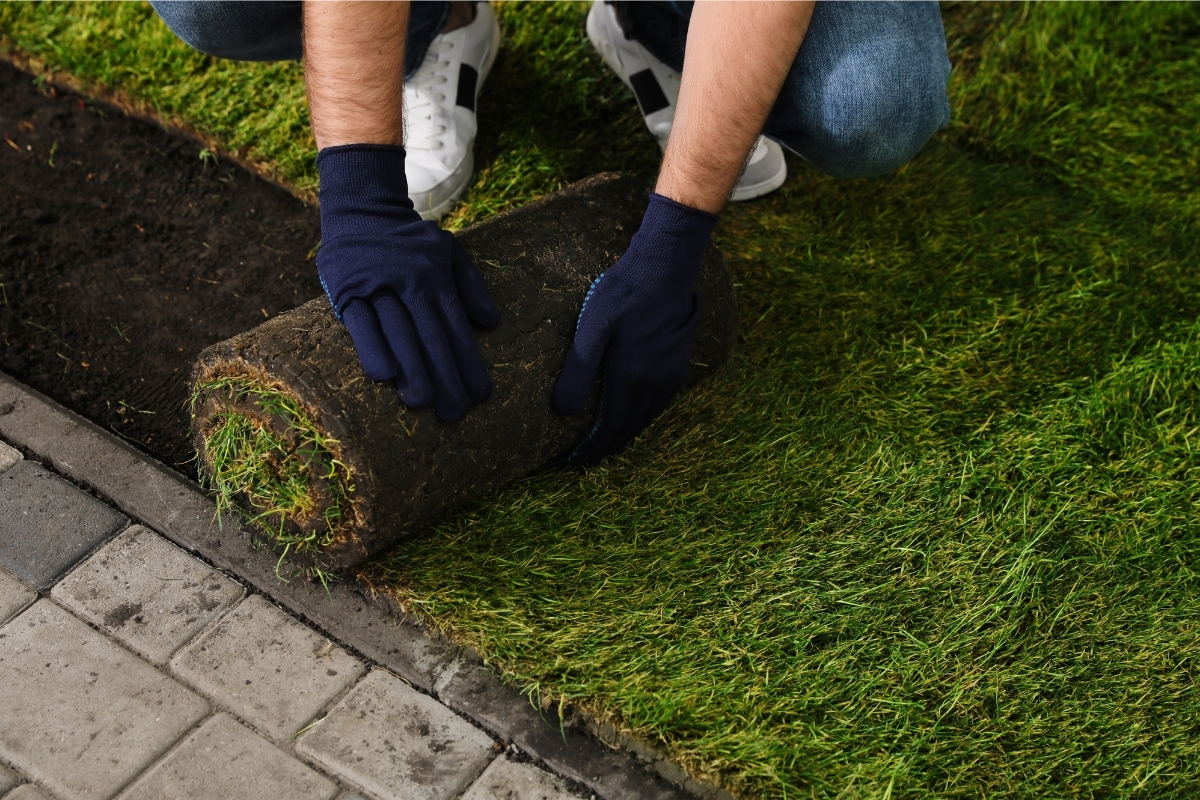
After the edging is in place, the turf is rolled out and carefully placed. Every piece must have the same grain direction, which is the way the synthetic blades face. One of the most common reasons a lawn looks fake and patchy instead of natural is that the grain is not aligned properly.
5. Cutting, Seaming, and Securing the Turf
Turf is cut to fit the precise contours of the installation area. For larger lawns requiring multiple pieces, seams are joined using specialized adhesive tape and bonded to be invisible. Seams placed incorrectly — or with the wrong technique — create a visible ridge that looks like exactly what it is: two pieces of turf that were not properly joined.
Cutting the turf to fit the exact shape of the installation area. When you need more than one piece for a bigger lawn, seams are joined with special adhesive tape and made to look invisible. When seams are put in the wrong place or with the wrong technique, they leave a visible ridge that looks like two pieces of turf that weren’t properly joined.
6. Infill, Power Brushing, and Final Grooming
Artificial turf infill and brushing is the finishing stage that transforms flat-looking synthetic material into a realistic, resilient lawn. A drop spreader spreads infill evenly at a rate of about 1 to 2 pounds per square foot. The infill is usually silica sand or an antimicrobial specialty product for pets.
A power broom then drives the infill down between the blades while lifting the fiber upright. This step directly affects surface appearance, drainage performance, blade memory, and long-term durability. If you don’t put enough infill in or skip the power brooming, the blades will be flat, the drainage will be less effective, and the turf will last less time.
Final Walkthrough: What to Expect and How to Maintain It
After the installation is done, we walk through the whole site with you. Before we say the job is done, we check the seams, edges, drainage flow, blade orientation, and infill coverage.
To keep your turf performing at its best:
- Rinse periodically to clear dust, pollen, and pet waste
- Use a stiff-bristle broom or power brush to lift matted blades
- Re-infill every few years in high-traffic areas
- Remove debris promptly to protect drainage performance
Benefits of Professional Installation
| Factor | Professional Installation | DIY or Low-Quality Install |
| Base compaction | Engineered, 90–95% compaction | Often inconsistent |
| Drainage | Site-specific permeable system | Frequently insufficient |
| Seaming | Invisible, adhesive-bonded | Visible, prone to lifting |
| Lifespan | 15–20+ years | Often 5–8 years |
| Finished appearance | Natural, seamless | Variable and patchy |
Artificial turf installation services from a qualified team protect your investment from day one. At Brookside Landscape & Design, we follow a People, Process, Product philosophy, the right team, a proven process, and a finished result that genuinely reflects the quality of the property we are working on. We serve homeowners across Bremerton, Bainbridge Island, Gig Harbor, Hansville, Port Orchard, Poulsbo, Silverdale, Kingston, WA, and Port Ludlow, WA.
Your Lawn Decision Starts Here: Make It the Right One
The artificial grass installation process, when executed correctly, delivers a lawn that looks better, lasts longer, and demands less from you than natural grass ever could. Every stage, from base prep for artificial turf to artificial turf infill and brushing, exists for a reason. If you miss one step, the whole system is at risk. If you follow the steps correctly, you’ll have a surface that works perfectly in both the Pacific Northwest’s harsh winters and dry summers.
Brookside Landscape & Design brings over 25 combined years of landscaping experience to every professional turf installation we complete across Kitsap County and the surrounding areas. We use premium, UV-resistant turf, a permeable drainage base system built for this region’s climate, and an installation process that does not cut corners, because the results are what we stand behind.
Ready to stop fighting your lawn and start enjoying it? Call us at (360) 434-6102 to get started. The team at Brookside is ready to walk your property, assess your site, and build a lawn that delivers exactly what it promises, year after year.