
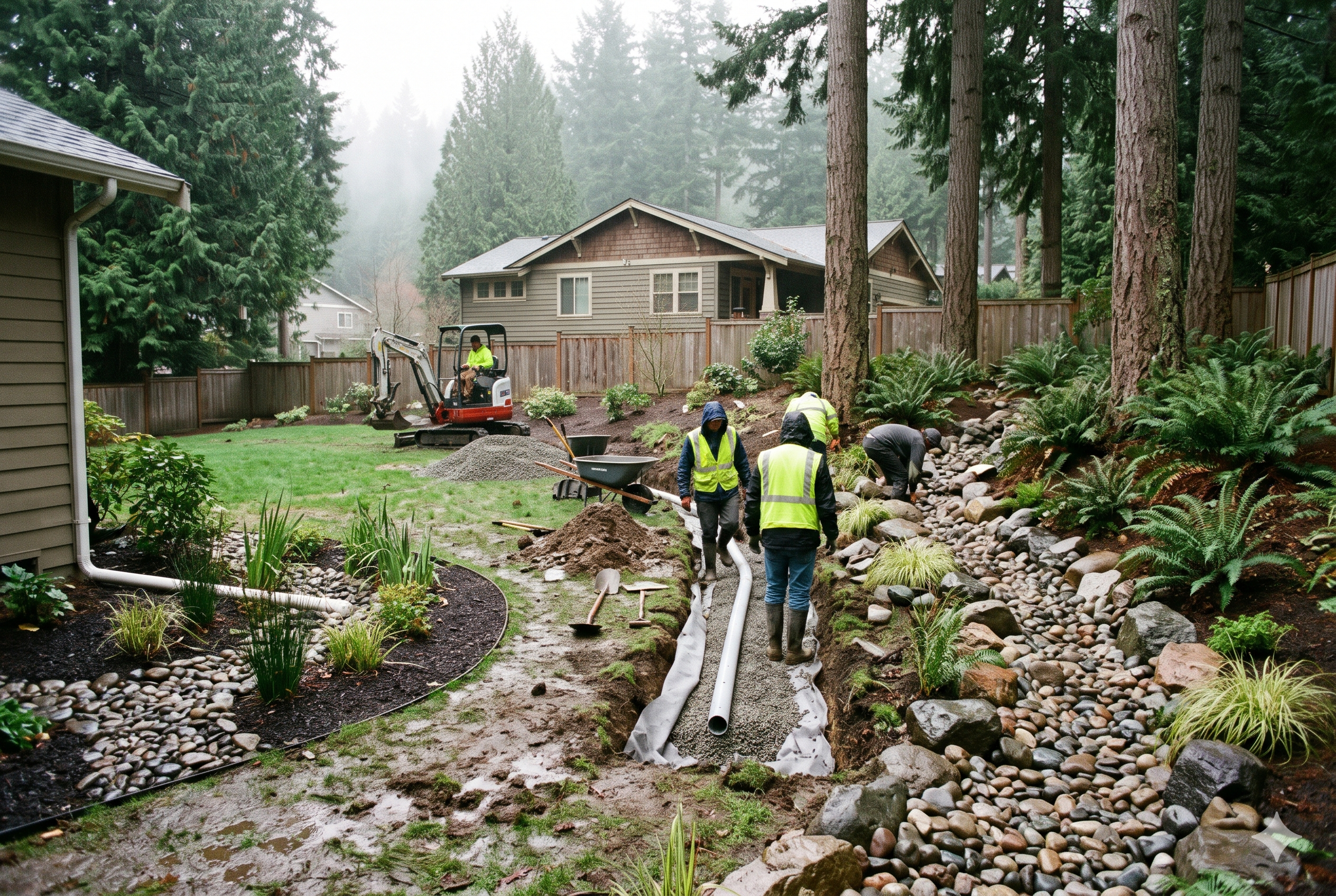
You can fix poor yard drainage by giving water a clear path away from your home, lawn, and garden. Regrading, French drains, rain gardens, healthy soil, and retaining walls all help in different ways. Most yards end up needing a combination.
Kitsap County has a long rainy season, so the ground stays soaked for months. It is frustrating to watch your lawn turn soggy when you just want to enjoy your yard. The good news is that this problem can be fixed.
So where is the water in your yard coming from? Which method fits your slope and soil? And when does the problem become too big for a weekend project? The sections below answer each of these questions. Brookside Landscape & Design provides yard drainage solutions that Kitsap County homeowners can build into a sustainable, well-designed landscape.
What Causes Poor Drainage in a Yard?
Drainage fails when water arrives faster than the soil can absorb it or carry it away. These are the usual causes:
- Dense, compacted soil lets water in slowly.
- Low or flat areas collect water from the surrounding ground.
- Roofs, driveways, and patios shed water that cannot soak in.
- Sloped lots, such as hillside yards in Port Orchard and on Bainbridge Island, send water downhill.
- Bare soil crusts over and repels water.
When any of these goes unchecked, standing water in yard areas drowns grass roots and softens the ground beside your foundation. Poor yard drainage also wears down patios, walkways, and plantings over time.
How Do You Fix Poor Drainage in a Yard? 10 Landscaping Solutions
Each cause calls for its own remedy. Brookside approaches landscaping for drainage problems by matching the method to your soil, your slope, and the rest of your design.
1. Regrade the Yard
Regrading corrects pooling near the house and in low spots. The surface is reshaped so water runs away from the foundation and toward a safe exit. Careful yard grading and drainage also keep walkways and patios stable.
2. Install a French Drain
A French drain carries groundwater out of a wet area through a buried pipe surrounded by gravel. It suits soggy lawns and the base of a slope. French drain installation works only when the pipe ends where water can leave safely.
3. Add a Rain Garden
A rain garden captures runoff from roofs, driveways, and patios, then lets it absorb slowly. It also filters the water before it returns to local waterways. Brookside is certified through Washington State University’s extension program for rain garden installation.
4. Prepare the Soil for a New Lawn
A lawn is as healthy as the soil beneath it. We prepare the soil for each site before laying sod or hydroseed, because every property starts from a different base. For grass that stays spongy, this preparation is among the most dependable waterlogged lawn solutions.
5. Build Retaining Walls on Slopes
A retaining wall holds back a slope and slows the water moving across it. We build block walls, rock walls, and gabion basket walls. Gabion baskets are rock-filled cages that also control erosion.
6. Set Patios and Walkways to Shed Water
Paver patios and flagstone paths should lead rain away from the house. A firm base and a gentle slope keep water from settling on the surface. Your outdoor spaces stay usable after a storm.
7. Plant for Wet Soil
Roots break up the soil and help it absorb water. Plants that tolerate damp conditions belong in the wettest areas. We install a variety of plants, so every part of the landscape complements the rest.
8. Direct Roof Water Into the Landscape
Downspouts that empty beside the house send every storm into your yard. Routing that water into a planted area built to receive it keeps lawns and foundations drier.
9. Review Your Irrigation
Sprinklers add water to soil that may already be saturated. We design and install sprinkler systems which water efficiently and prevent waste, which supports a healthier yard.
10. Replace Lawn That Never Dries
Some low or shaded areas stay wet despite every other effort. Artificial turf installation gives those areas a green, usable surface. We can advise you on whether it suits your property.
Not sure which solution applies? Get in touch with our team.
Which Drainage Solution Fits Your Property?
Match the solution to the water source. Surface runoff calls for grading, groundwater calls for a drain, and roof water needs a place to soak in.
| Your Problem | Best Fit | What It Does |
| Water pools near the foundation | Yard grading and drainage | Moves surface water away from the house |
| A low area stays wet from below | French drain | Carries groundwater out of the area |
| Roof and driveway runoff floods the lawn | Rain garden installation | Absorbs and filters stormwater |
| The lawn feels soft and spongy | Waterlogged lawn solutions through soil preparation | Lets roots and water move freely |
| A slope sends water downhill | Block, rock, or gabion walls | Holds the slope and manages runoff |
| A shaded area never dries | Artificial turf | Provides a usable green surface |
Most properties need a combination of these methods. Brookside plans landscape drainage solutions as part of the full design, so every element complements the rest, from the largest structure to the last shrub.
Drainage Mistakes That Keep Yards Wet
The most common mistake is treating the symptom instead of the source. Avoid these errors:
- Sending water onto a neighbor’s property moves the problem without solving it.
- A French drain installation with no outlet only stores water underground.
- Planting over standing water in yard areas wastes both plants and effort.
- Using the same fix everywhere ignores the difference between groundwater and roof runoff.
- Waiting through the rainy season lets water keep damaging the lawn and soil.
When Should You Hire a Professional?
Hire a professional when water reaches your foundation, returns after every storm, or you need excavation, grading, or walls. These signs mean the job is larger than a do-it-yourself repair:
- Water stays pooled long after the rain stops.
- The same lawn areas stay soft or patchy.
- A slope is eroding or shifting.
- Earlier fixes did not last.
Brookside is a licensed landscape company that serves all of Kitsap County. Our approach rests on people, process, and product, and we aim to deliver landscape drainage solutions that last. We offer free ballpark estimates over the phone when you provide enough pictures and information. Financing is also available.
Get a Drier Yard With Brookside Landscape & Design
A drier yard begins with finding the cause and choosing the right fix. Brookside serves Silverdale, Bremerton, Poulsbo, Port Orchard, Gig Harbor, Bainbridge Island, Kingston, Hansville, Seabeck, and Port Ludlow. We bring landscaping for drainage problems together with design that makes your property a place you enjoy.
For yard drainage solutions in Kitsap County residents can depend on, contact Brookside today to transform your property.